
Beyond the Brain
Monique Craig
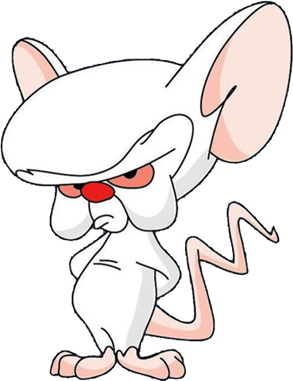
Pinky: G-day, what are we doing today?
The Brain: The same thing we try to do every night Pinky, try to take over the world.
The theme song continues for these two characters — one is a genius and the other is insane.
In my eyes, this cartoon’s theme song admirably epitomizes the dichotomy between the genius aspect of our brain and our delusional obsession with it.
For those who have never heard the theme song of this cartoon, here is the link on YouTube…
https://www.youtube.com/watch?v=e_mPrhwpZ-8
My first introduction to our amazing brain was during my biology lessons in secondary school, when I was about 11 years old. It was mostly an overview of the central nervous system and the peripheral nervous system. The brain was presented as being in absolute control of everything in the body and in the mind. The notion of closed-loop systems between organs was not embraced; additionally, intelligence and consciousness were deemed unique traits of humans.
This narrative seemed very odd to me. Why would an organ pass judgment on itself and its environment? It looked, to me, like a recursive loop of the brain looking at itself — fascinating, strange, and somewhat alarming. In recent years, brain-centricity has been revised, at least from a physiological viewpoint, but not necessarily when it comes to acknowledging other forms of intelligence, such as those found in plants and animals.
I am not challenging the advances of human neuroscience or the remarkable capabilities of our brain, but I do feel there is a need for a paradigm shift.
Cardiocentric vs Cephalocentric Perspective in Ancient Medicine
All ancient civilizations believed that the heart was the biological and spiritual center of the body. The cardiocentric view maintained a special role in medicine for millennia. Ancient medicine seems to not disassociate spirituality from physical reality.
The oldest medical texts were found in ancient Egypt. The Kahoun papyrus dated 1950 BCE, and the Edwin Smith Papyrus dated 1600 BCE respectively. These early medical documents indicate that ancient Egyptians were aware of brain anatomy. For instance, they already knew that an injury to the brain or spinal cord could result in paralysis. These documents mentioned the practice of surgery including brain surgery. This proves that Egyptians understood aspects of neuroanatomy and neuroscience. Interestingly, the brain was not regarded as important as the heart. During mumification the brain was scrambled and discarded while the heart was mummified and put back into the corpse. The heart was believed to be the center of a person’s mind.
In the fourth century BCE, Aristotle identified the heart as being the most important organ, not the brain. Aristotle was a polymath and wrote about many different subjects besides medicine. Note the ancient Greeks were divided about cardiocentricity vs cephalocentricy. For instance, Pytagores (570 – 495 BCE) believed that the brain was the center of intelligence and was not explicitly locating the heart as being the center of the soul. However, both Aristotle and Pytagores believed in the existence of the soul.
The foundation of Chinese traditional medicine (TCM) is based on a treatise written around 200 BCE (Huangi Neijing – Yellow Emperor’s Classic of Medicine). Tradionally, the brain was not regarded as an organ whereas the heart, liver, spleen, lungs and kidneys were considered organs. Although neurology as we understand today was seemingly ignored in TCM, it has been capable of treating neurological diseases. TCM has been practice for 23 centuries. TCM views the body, mind and spirit as deeply connected with interchangeable roles. This integrative belief carries through other ancient medical cultures such as Indian Vedic medicine (Ayurveda medicine) which is 6000 years old. In other words, healing was a holistic approach unlike modern medicine which tends to compartmentalize the body. Also, modern science and medicine as whole tend to disassociate the physical aspect of the body from the spiritual one.
The Heart
Current scientific understanding shows that the heart is far more complex than a simple circulatory pump. In addition to its role in propelling blood throughout the body, the heart functions as an endocrine gland and contains an intrinsic nervous system. Its endocrine signaling contributes to cardiovascular homeostasis, while approximately 40,000 sensory neurites form a sophisticated neural network capable of certain regulatory activities independent of the brain—often referred to as the heart’s “mini-brain.”
These characteristics suggest that the heart demonstrates a form of functional intelligence. Cardiac rhythms influence brain activity, and this communication is bidirectional: the central nervous system regulates heart function, while the heart simultaneously affects neural processes. Heart rhythm also plays a measurable role in shaping emotional states and cognitive performance.
Some studies have reported behavioral and personality changes in individuals following heart transplantation, implying that the autonomic nervous system may integrate cardiovascular and cognitive functions. However, research in this area is still emerging, and current findings remain inconclusive. What is clear is that the cardiovascular system does far more than circulate blood—its dynamic interactions with the nervous system make it an essential component of emotional and cognitive regulation.
The Microbiome–Gut–Brain Axis
The gut–brain axis is a bidirectional communication network between the central nervous system (CNS) and the enteric nervous system (ENS), the latter being embedded within the lining of the gastrointestinal tract. This system allows the brain to influence digestion and intestinal activity, while the gut simultaneously impacts mood, cognition, and mental health.
There are estimated to be roughly one hundred trillion microbial cells in the gut, outnumbering human cells by a significant margin. Humans and microbes have co-evolved over millions of years, forming a symbiotic relationship essential to health. Recent research highlights the crucial role of the gut microbiome—an ecosystem of bacteria, fungi, viruses, and protozoa residing primarily in the gastrointestinal tract—in modulating brain function and behavior. The gut microbiome plays a significant role in the production and regulation of neurotransmitters such as serotonin and GABA. Growing evidence suggests that disruptions in the gut microbiome contribute to conditions such as depression, anxiety, and autism spectrum disorders. It is remarkable – and a little humbling – that microorganisms in our gut can have such a profound influence on the brain. We like to think of ourselves as brain-centric but perhaps these bugs are running the show!
Octopuses: Multiple Brains and Hearts
Octopuses are widely regarded as the most intelligent of the invertebrates. Their ability to perform tasks such as opening jars—often demonstrated in research settings and online videos—highlights their advanced problem-solving skills. An octopus has approximately 500 million neurons, this number comparable to that of some mammals such as dogs. Although the octopus has a brain it also possesses eight decentralized neural clusters in its arms. These arm-based nervous systems can operate semi-independently from the central brain. Each arm has suckers which allow the octopus to interact with its environment by providing sensory and motor inputs. Amazingly, the suckers function completely independently thanks to the segmentation of the arms nervous system. Meaning that each sucker can make decisions on its own. The octopus’ suckers have neurological pathways which bypass the brain and the neural ganglia of the arms.
In addition to their unique neural architecture, octopuses have three hearts: one systemic heart that pumps blood throughout the body and two branchial hearts that pump blood through the gills.
Could octopuses be aliens?
Intelligence Without a Brain
Intelligence does not always require a brain. For example, white blood cells actively seek out and destroy pathogens—a process observable in microscopic imaging. These cells are not passive; they integrate environmental signals and make context-dependent decisions autonomously.
Slime molds provide another compelling demonstration of cellular intelligence. The species Physarum polycephalum has been extensively studied and can perform complex tasks without any nervous system. Slime molds can navigate mazes to find food, remember previous nutrient locations, and adapt their behavior based on past experiences. They can sense food sources from a distance and dynamically respond to environmental changes. For instance, when slime molds were studied scientifically in labs, it was found that slime molds can re-enforce their pathways when reaching a food source in a maze or decide to abandon their search when the slimes hit a dead end or when the path is not optimal. In other words, slimes know how to optimize their searches to find the most efficient path through a maze.
These examples challenge traditional definitions of cognition and illustrate that intelligent behavior can emerge even in the absence of a brain.
The Pros and Cons of Human Intelligence
Human intelligence is often attributed to our large brains. While this is true, human intelligence is likely unique because of our highly developed cognitive functions, such as language and the ability to record it in written form. This capacity has enabled humans to transfer complex, abstract information cumulatively across generations. In other words, each new generation does not need to rediscover concepts such as blood circulation or how to build a skyscraper. I would not be able to write this article if others had not previously contributed scientific knowledge.
Unfortunately, this advantage is not always beneficial. The human brain can generate abstract thoughts that may be used for better or for worse. Cultural and social knowledge does not always serve the betterment of humankind or the natural world. Culturally, we tend to be anthropocentric in how we view other forms of intelligence. Over centuries, cumulative knowledge has also produced rationalizations for injustice, including racism, gender inequality, and animal abuse, to name a few drawbacks of our intellect.
Science itself is not immune to flawed mental constructs. Paul Broca (1824–1880), the scientist who discovered the brain region responsible for language processing—now known as Broca’s area—also held deeply racist views about the mental capacities of women and people of color. As a white male in the nineteenth century, Broca was largely a product of his time. This example calls into question the assumed omnipotence of human intellect.
We may need to approach our cognitive abilities with greater humility and, as ancient cultures often did, integrate emotional and ethical awareness—our “hearts”—into our thinking. In many ways, humans are not the only intelligent beings on this planet. While we may be the most technologically sophisticated, only time will determine whether such sophistication truly benefits long-term survival. Perhaps it is time that we break free of the recursive loop of “the brain elevating the brain” and begin to view the world in a more symbiotic manner.
References
Ancient Medicine
[1] Minegar et al, “The Edwin Smith Surgical Papyrus: Description and Analysis of the Earliest Case of Aphasia”, Journal of Medical Biography, Vol 11, Issue 2, May 2003.
[2] M. Oleksowicz, “ARISTOTLE ON THE HEART AND BRAIN”, European Journal of Science and Theology, June 2018, Vol.14, No.3, 77-94.
[3] A. Martin-Araguz, “Neuroscience in Ancient Egypt and in the School of Alexandria”, Rev. Neurol., June 2002.
[4] V. Michael Figueredo, “The Ancient Heart”, JOURNAL OF THE AMERICAN COLLEGE OF CARDIOLOGY, VOL. 78, NO. 9, Elsevier, 2021.
[5] M. Ni, “The Yellow Emperor’s Classic of Medicine: A New Translation of the Neijing Suwen with Commentary”, Shambhala Publications, 1995.
[6] F. Zampieri, “Cardiocentrism in ancient medicines”, IJC Heart & Vasculature 48, 2023.
The Heart
[7] S. Xu, “Heart-brain connection: How can heartbeats shape our minds?”, Matter 7, 1684–1695, Elsevier, May 1, 2024.
[8] A. Alshami, “Pain: Is it all in the Brain or in the Heart?”, Curr Pain Headache Rep, Springer, 2019.
[9] M. Tendulkar et al, “Clinical potential of sensory neurites in the heart and their role in decision-making”, Front. Neurosci. 17:1308232. doi: 10.3389/fnins.2023.1308232
[10] N. Herring, D. Paterson, “The Heart’s Little Brain: Shedding New Light and CLARITY on the ‘Black Box’”, Circulation Research, April 2021.
The Microbiome and Gut-Axis
[11] L. Dicks, “Gut Bacteria and Neurotransmitters”, Microorganisms 2022, 10, 1838. https://doi.org/10.3390/microorganisms10091838
[12] R. Xiong, “The Role of Gut Microbiota in Anxiety, Depression, and Other Mental Disorders as Well as the Protective Effects of Dietary Components”, Nutrients 2023, 15, 3258. https://doi.org/10.3390/nu15143258
[13] M. Gershon1 and K. Margolis, “The gut, its microbiome, and the brain: connections and communications”, Clin Invest. 2021;131(18):e143768. https://doi.org/10.1172/JCI143768.
[14] R. Sender et al, “Revised Estimates for the Number of Human and Bacteria Cells in the Body”, PLoS Biol 14(8): e1002533. doi:10.1371/journal.pbio.1002533
The Octopus
[15] D. Neacsu1, and R. Crook, “Repeating ultrastructural motifs provide insight into the organization of the octopus arm nervous system”, Current Biology 34, 4767–4773, October 21, 2024.
[16] S. Carls-Diamante, “Where Is It Like to Be an Octopus?”, Front. Syst. Neurosci. 16:840022. doi: 10.3389/fnsys.2022.840022, 2022.
[17] L. Zullo et al, “Motor control pathways in the nervous system of Octopus vulgaris arm”, Journal of Comparative Physiology A (2019) 205:271–279.
[18] R. Jacobs, “Diffusion MRI Connections in the Octopus Brain”, Exp Neurobiol. 2022 Feb;31(1):17-28.
[19] C. Olson et al, “Neuronal segmentation in cephalopod arms”, Nature Communications| (2025) 16:443.
Cell Intelligence and Molds
[20] B. Ford, “The cell as secret agent—autonomy and intelligence of the living cell: driving force of development”. Academia Biology 2023;1. https://doi.org/10.20935/AcadBiol6132.
[21] P. Lyon, “The Cognitive Cell: Bacterial Behavior Reconsidered”, Frontiers in Microbiology, 6. 264, 2015.
[22] B. Meyer et al, “The role of noise in self-organized decision making by the true slime mold Physarum polycephalum”, PLoS ONE12(3): e0172933. https://doi.org/10.1371/journal.pone.0172933.
[23] A. Boussard et al, “Adaptive behaviour and learning in slime moulds: the role of oscillations”. Phil. Trans. R. Soc. B 376:20190757. https://doi.org/10.1098/rstb.2019.0757
0 Comments